PRI at ten & Blueprint
Design for PRI’s tenth anniversary and its plan for the next decade

The Principles for Responsible Investment (PRI) marked its tenth anniversary in 2016, then published its Blueprint for Responsible Investment in 2017. Alessandro Boaretto, PRI’s sole in-house designer, worked on both across an 18-month programme alongside the organisation’s everyday design needs.
His role covered the identity, publications, websites and campaign materials, as well as coordinating suppliers and production. He worked with PRI’s communications team, internal colleagues, web agencies, filmmakers and print partners.
Brand identity A mark for ten years
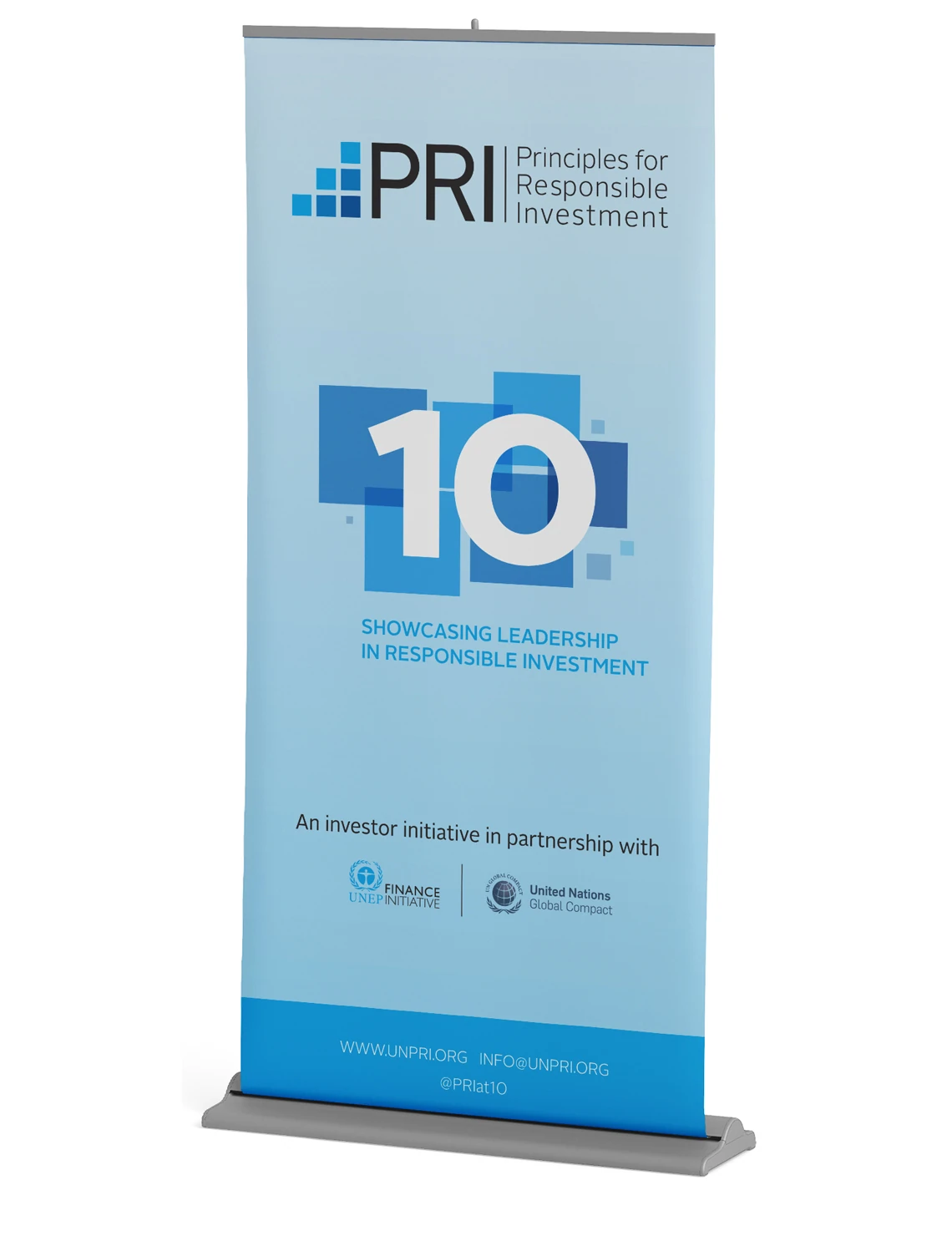
A year of anniversary communications needed an identity that would work on a website, in print and at events. Alessandro and the Head of Communications mapped the requirements with internal teams, then agreed what they could make in-house and where they needed outside help.
Six larger squares in the anniversary mark stand for PRI’s six principles. Four smaller squares bring the total to ten. The mark gave the different campaign materials a common point of reference.
Web design Past, present and future
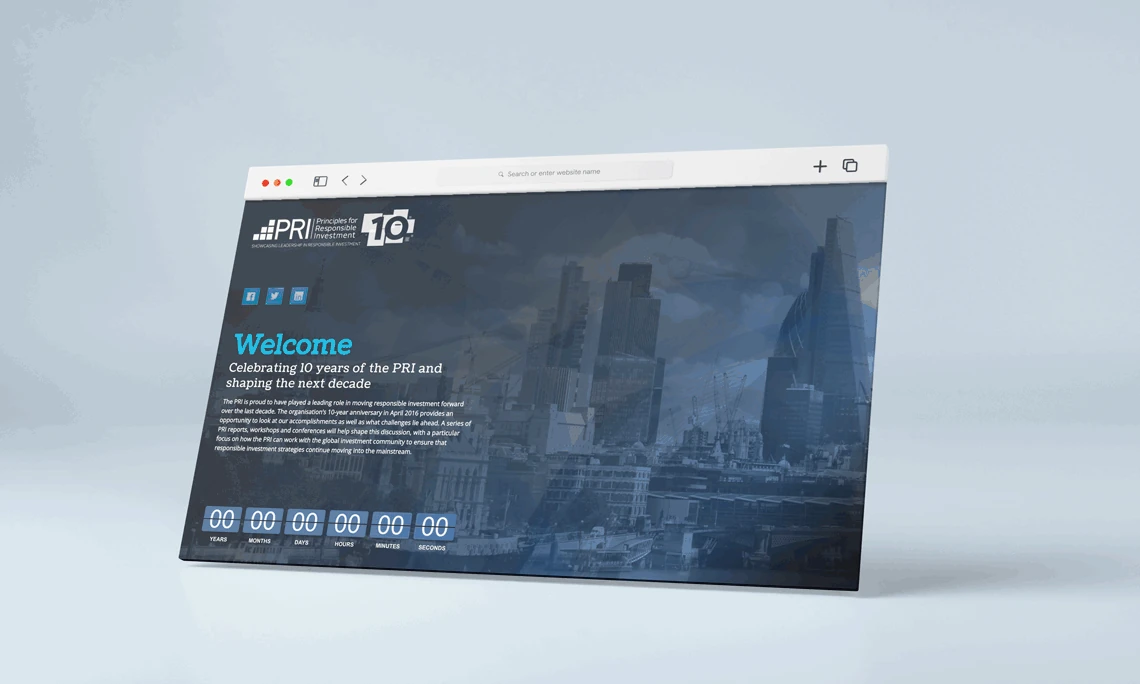
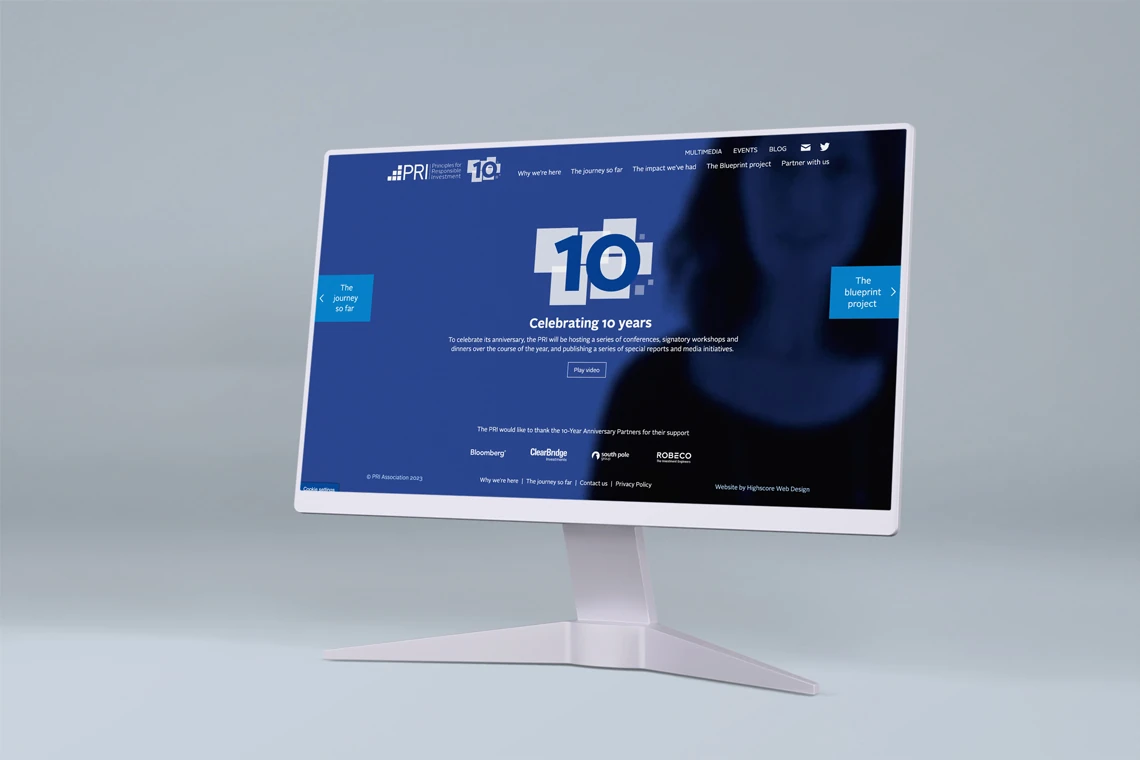
The anniversary website gave visitors three ways into PRI’s work: an interactive timeline of its achievements, an invitation for signatories to act, and a section setting out the Blueprint’s priorities for the future.
Alessandro built the coming-soon page in HTML and CSS with help from IT. He then worked with a web agency on the full site’s design, structure and content, staying involved through development and feedback. The site was delivered ahead of schedule.
Film production Asking signatories to act
The anniversary film asked signatories to renew their commitment to PRI’s six principles and share it with a wider audience. Alessandro helped develop the script with managers and the production company, then supervised the three-day shoot in a London studio.
Some contributors were less comfortable in front of a camera, so preparation and casting needed attention during the shoot. Giving people time to settle in became a lesson Alessandro took into later filming work and a guide for speakers recording their own clips.
We Challenge You
The anniversary campaign invites signatories to renew their commitment to the PRI’s six principles and make responsible investment part of everyday market practice.
Watch on YouTube: We Challenge You (opens in a new tab)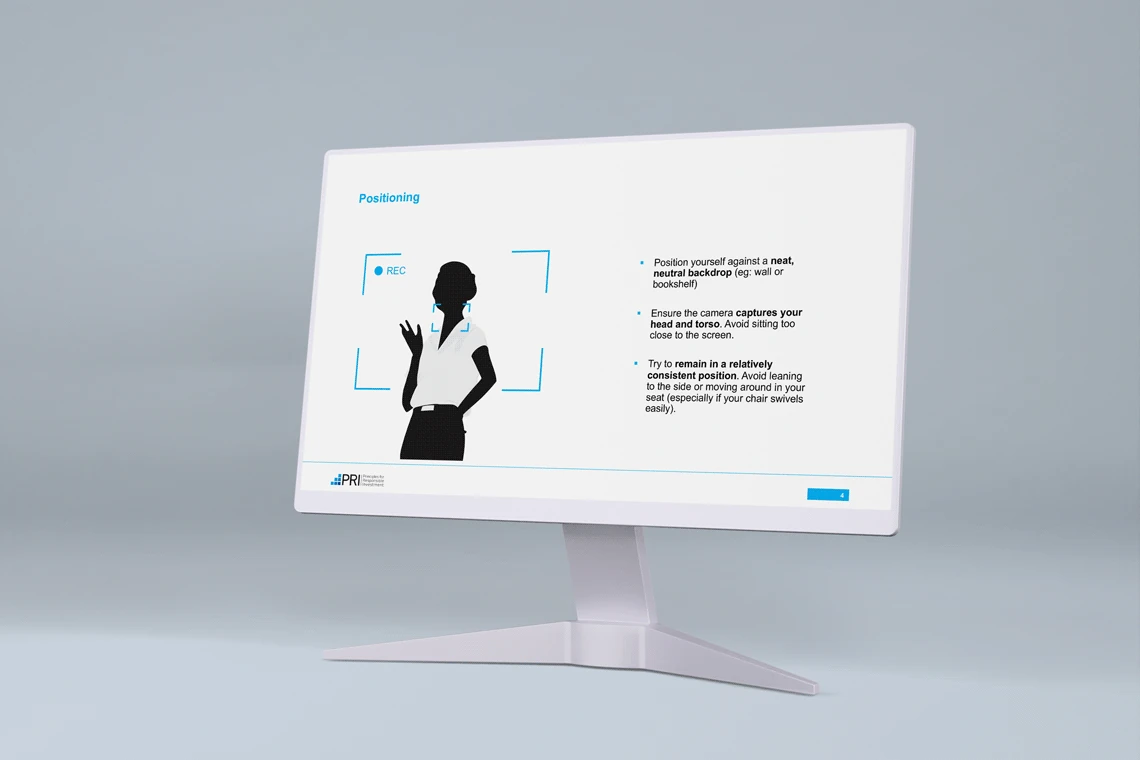
Helping speakers feel prepared
Time spent helping someone feel at ease can make filming less demanding for them. The later guide turned that experience into practical advice for speakers preparing recordings for events and webinars.
Read the presenting-to-camera guide (PDF)Campaign and event design An international programme
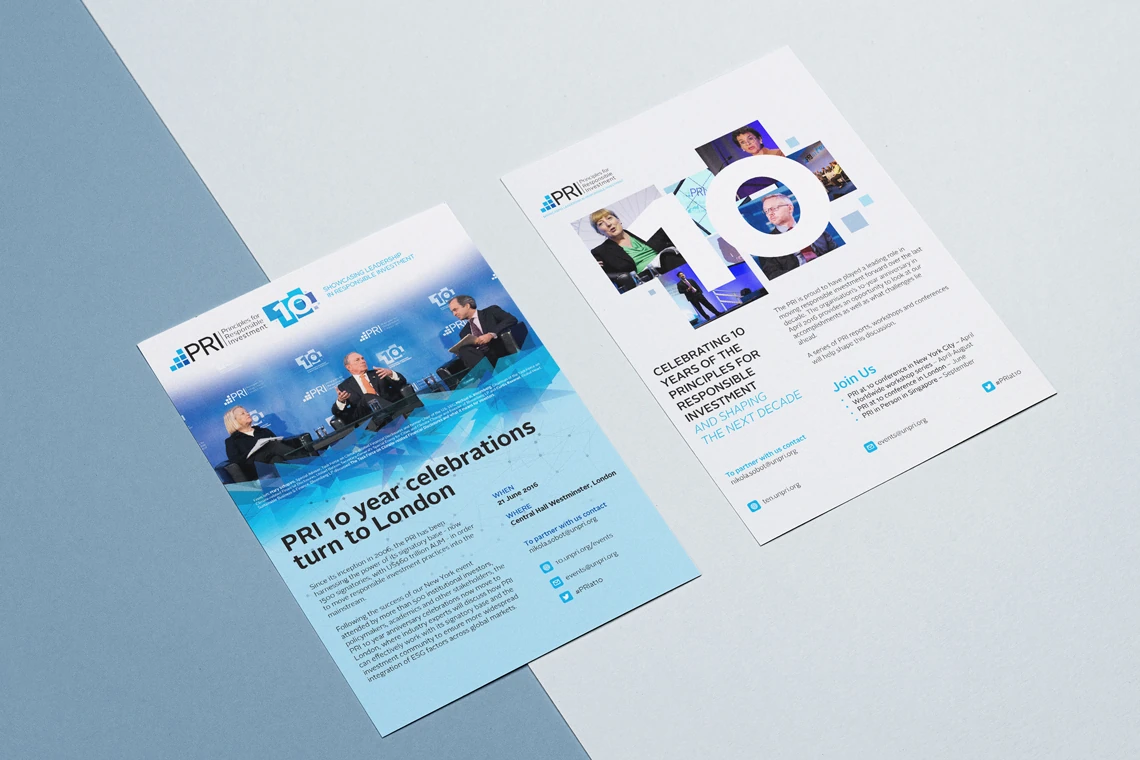
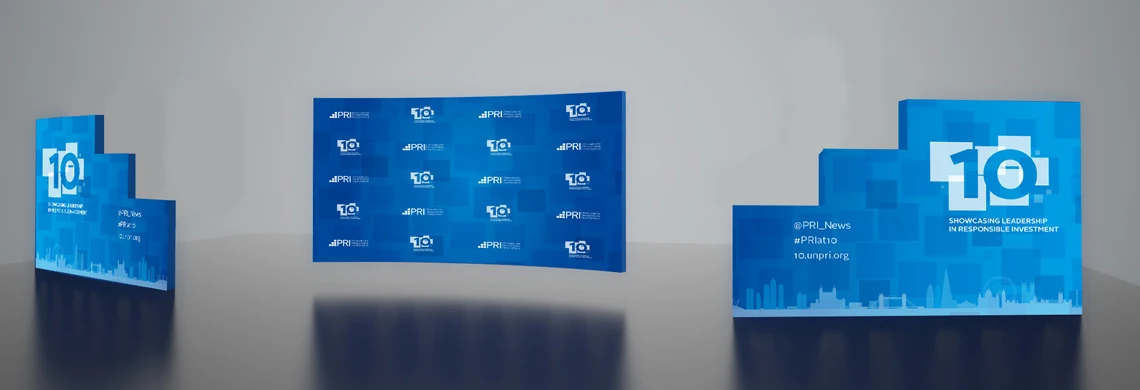
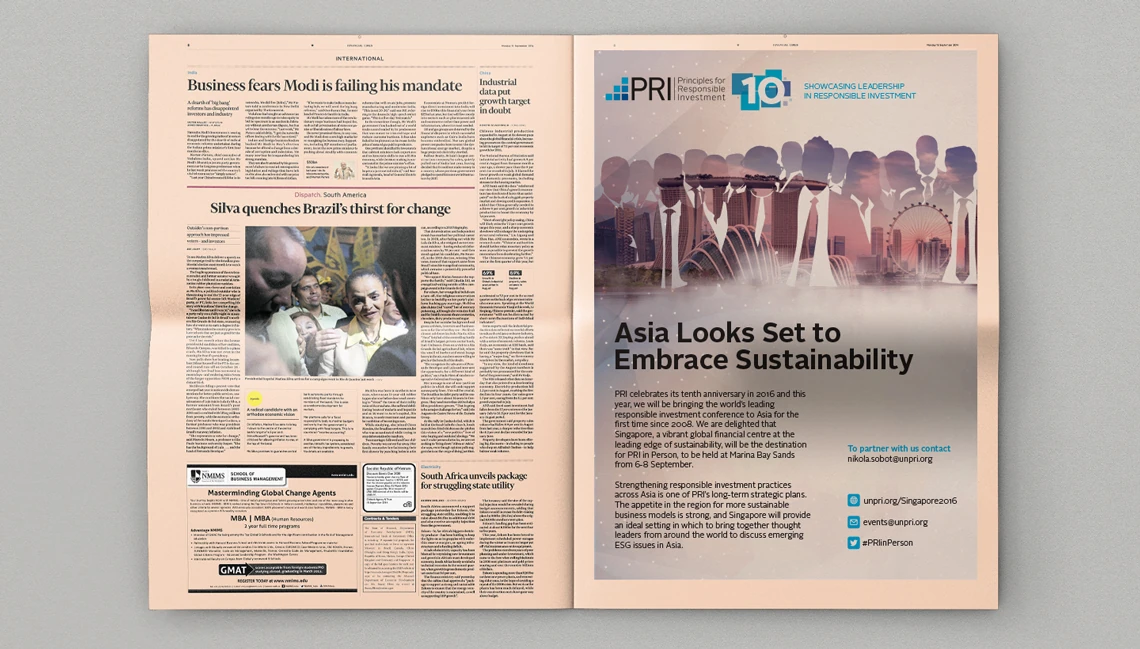
The identity appeared at half-day events in London and New York and the annual conference in Singapore. Alessandro designed flyers, venue materials and advertising, including a Financial Times advert. The #PRIat10 campaign invited signatories to share their views on the organisation’s future.
He also coordinated signatory interviews in London, New York and Tokyo. When the Japanese footage did not meet the standard needed for the finished film, he travelled to Tokyo to supervise a reshoot with a local bilingual production company.
Signatory perspectives
Interviews with PRI signatories examine the future of responsible investment, with Alessandro coordinating international filming through local production partners.
Watch on YouTube: Signatory perspectives (opens in a new tab)Information design How the Blueprint fits together
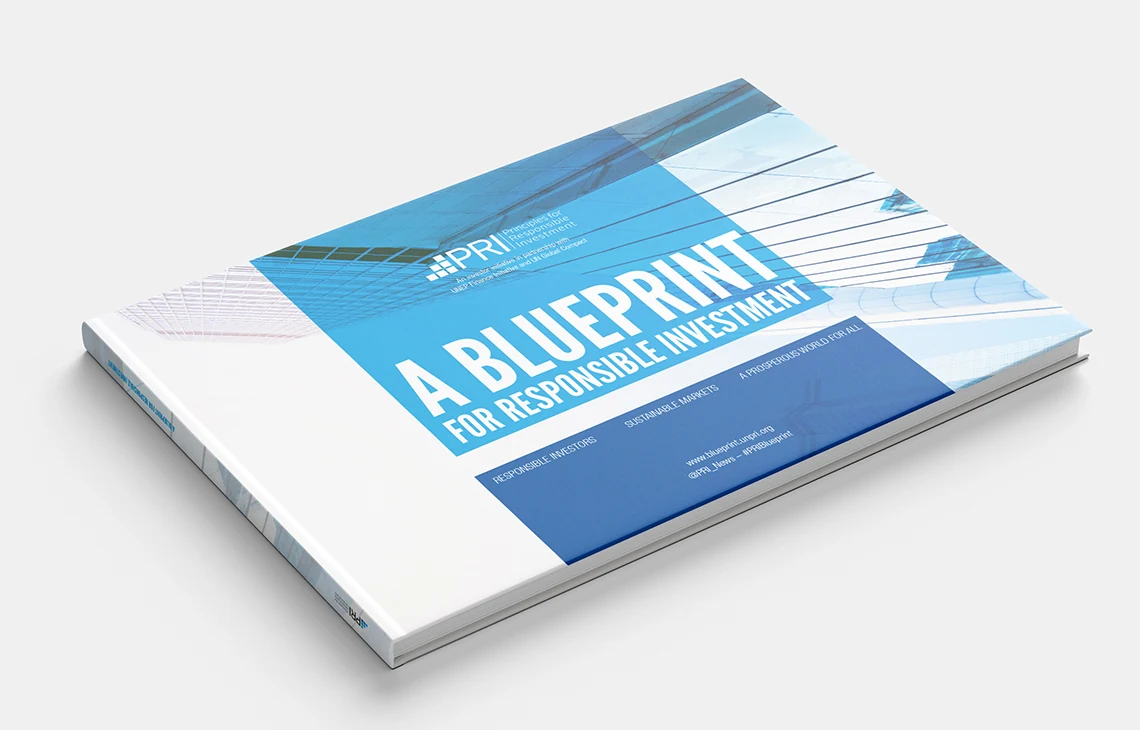
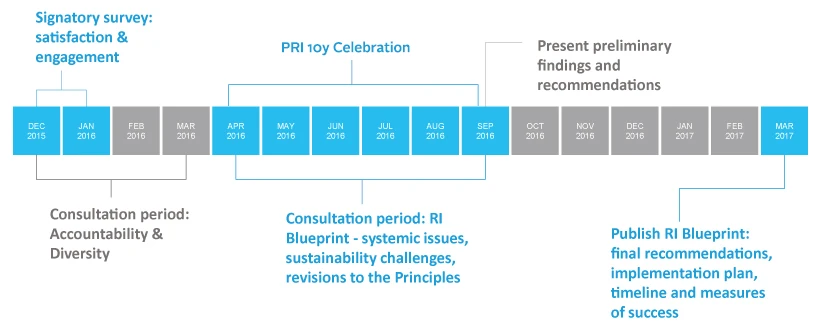
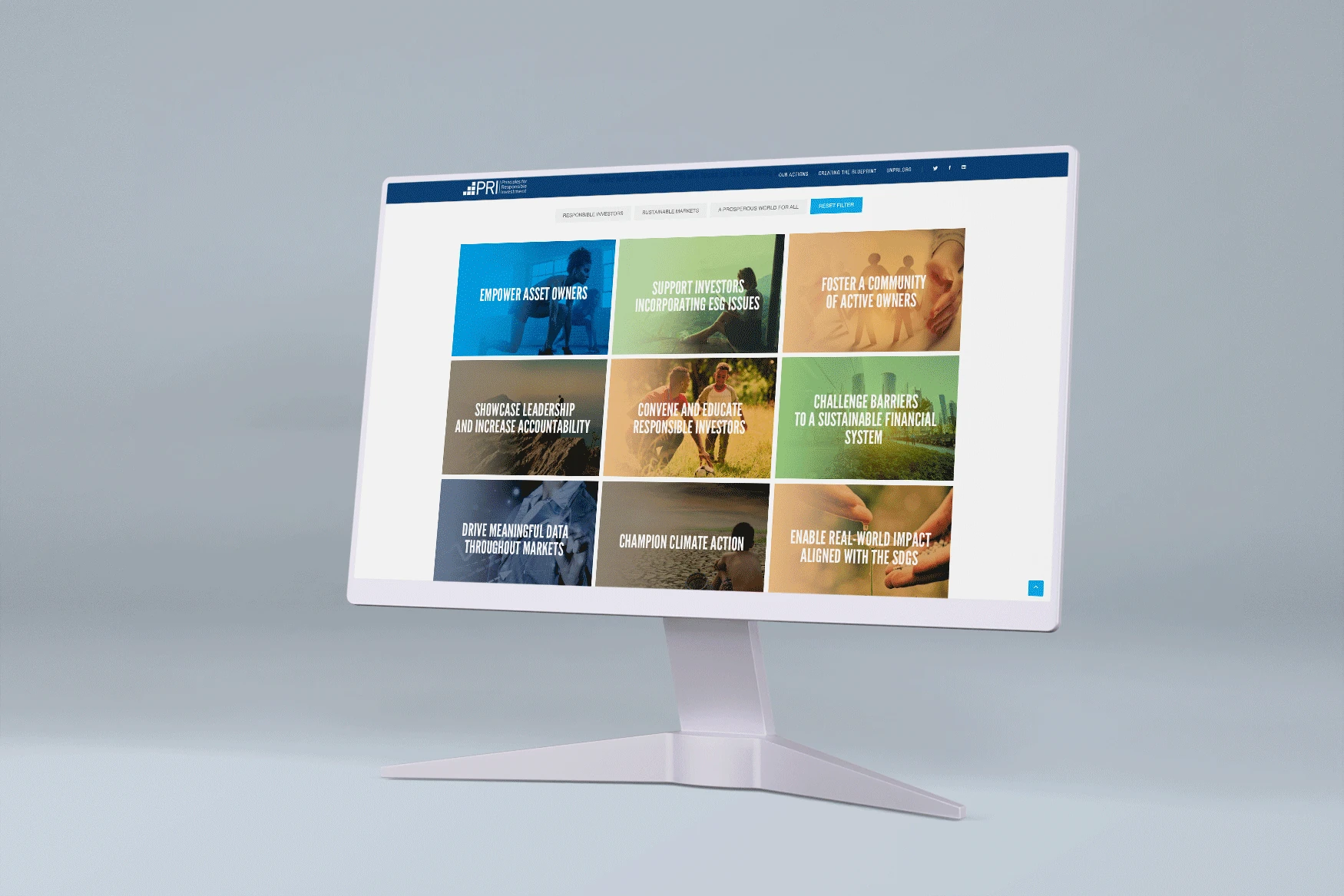
The Blueprint set out PRI’s priorities for 2016–2026, drawing on consultation with signatories and external advisers. Alessandro designed the publication and most of its website, and worked with partners on the explanatory film, campaign materials and Berlin conference presence.
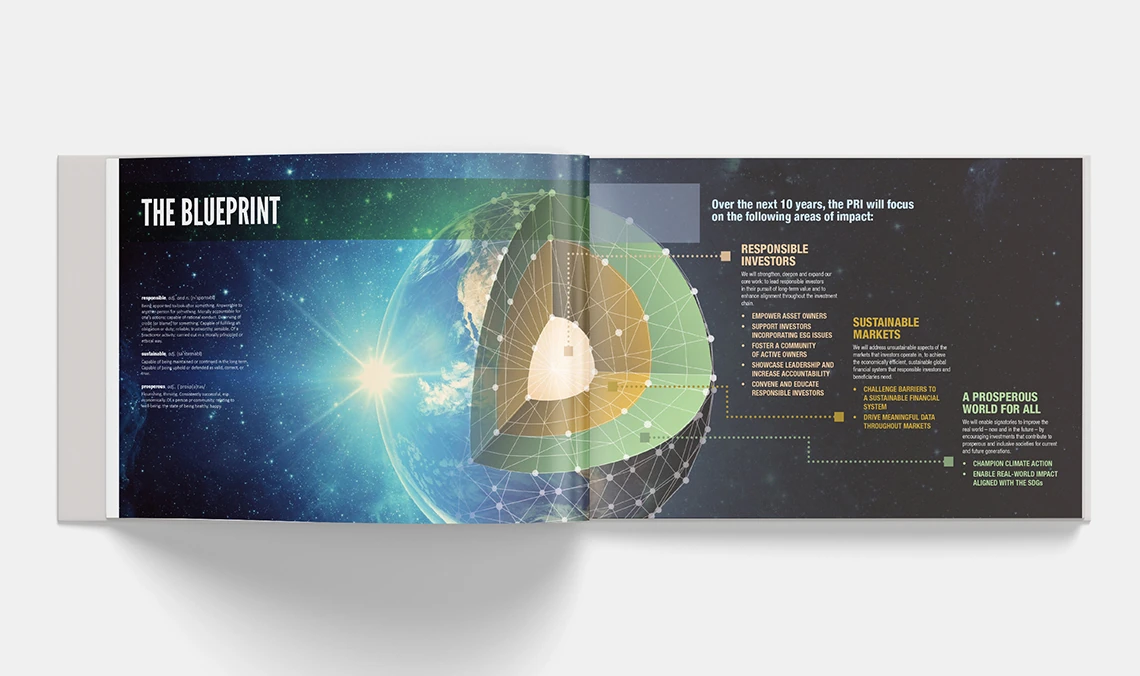
A cutaway planet pictured the relationship between responsible investors, sustainable markets and a prosperous world. Its layers showed how the Blueprint’s three areas of influence depend on one another, giving the report and campaign a shared image to work with.

Editorial and print design A book people could keep
The book needed to stand apart from PRI’s usual publications. With limited time and money, Alessandro and his manager put most of the budget into the printed report, which signatories and conference attendees could take away and keep.
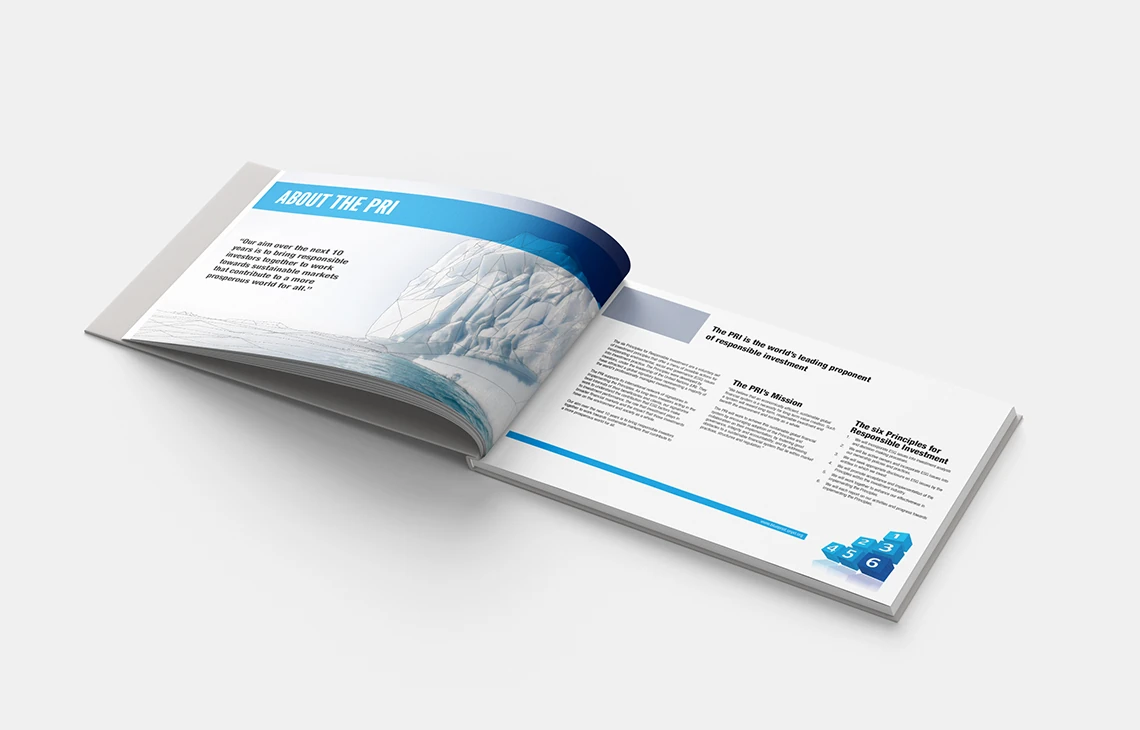
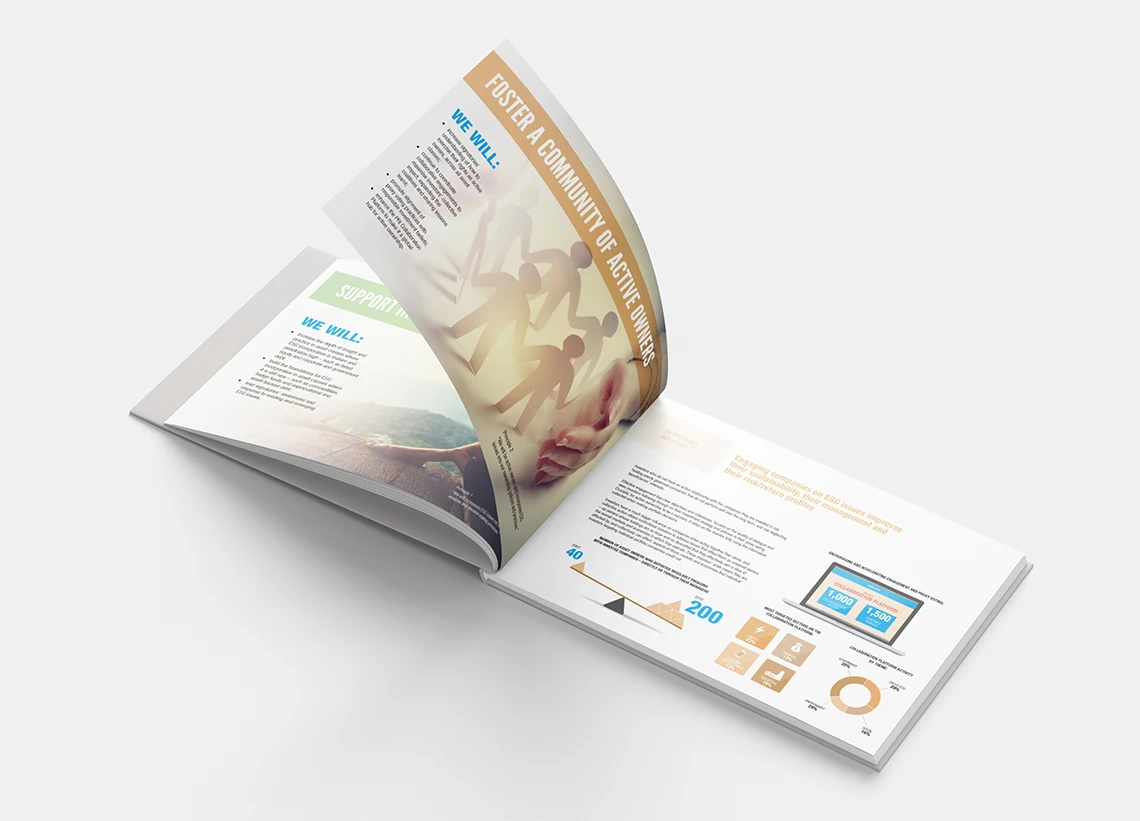
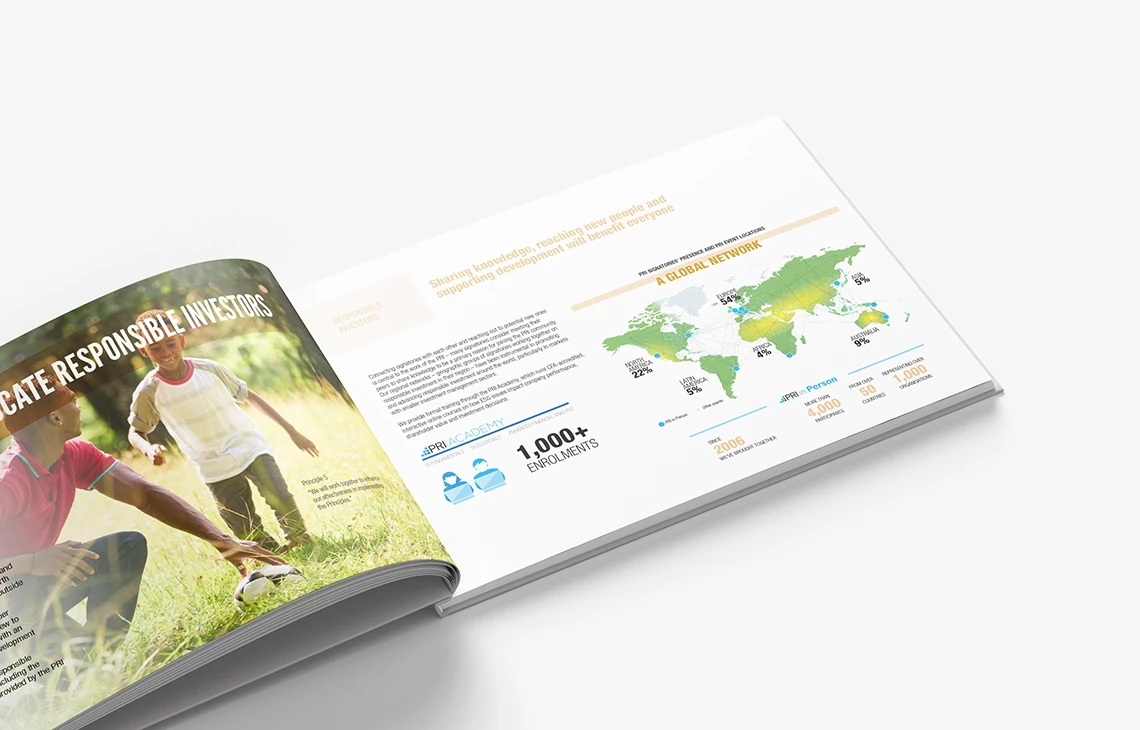
With a Kent print supplier, Alessandro developed an A4 landscape book with a case-bound cardboard cover, lay-flat binding and a slipcase. The binding kept the full spread readable, while FSC-certified paper met the production brief. He worked with the editor to bring the text and statistics into layouts built around photography and information graphics. PRI’s chief executive praised the book’s layout and presentation.
Digital design and motion The Blueprint campaign
Building the Blueprint website in-house left more of the budget for the book. Alessandro used a purchased template and coded most of the pages, asking a colleague in the PRI Academy team for help when needed. Internal testing and approval followed before launch.
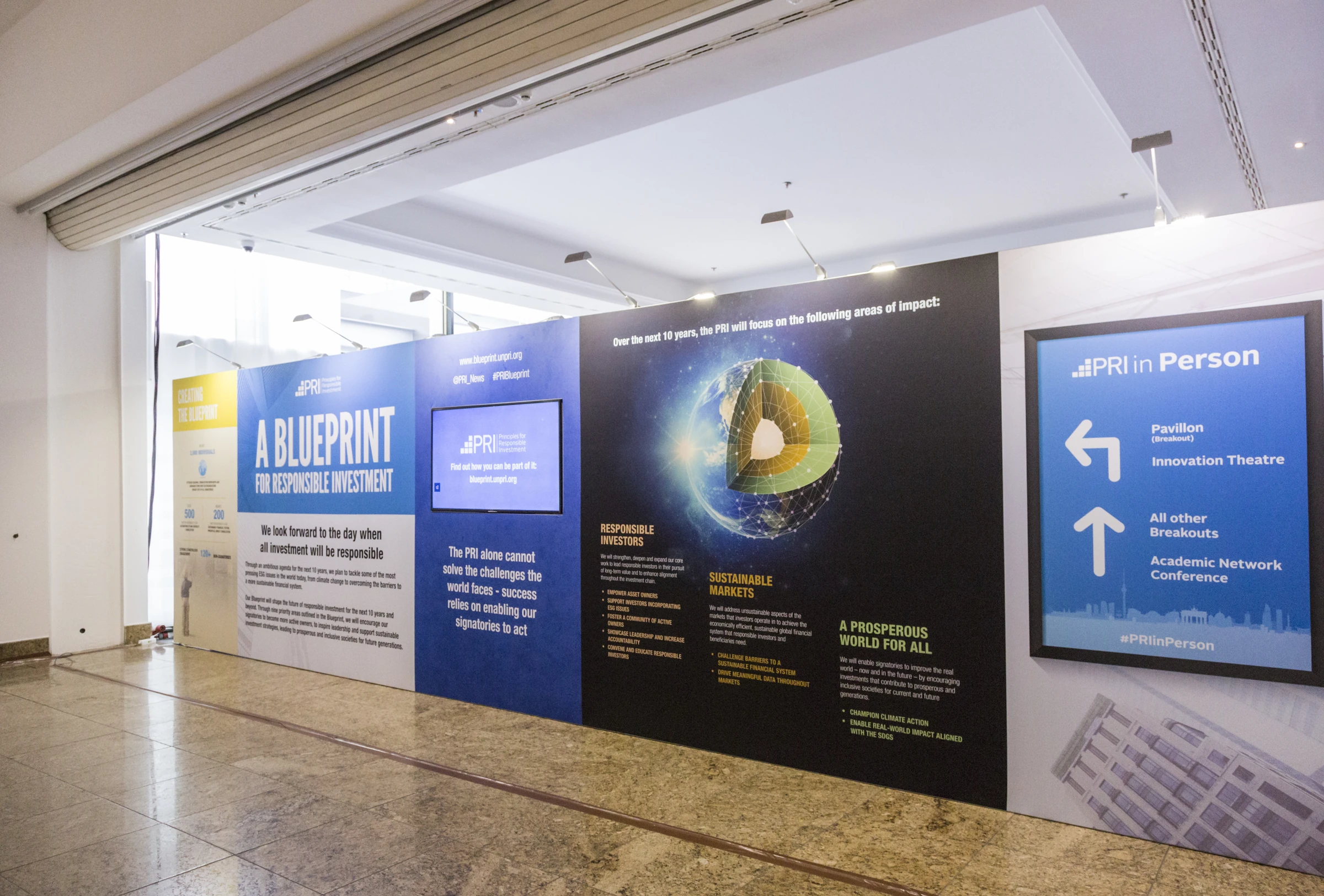
Social cards and an animated explainer carried the Blueprint online and into the Berlin conference. Alessandro worked with an animation agency on a film that explained the global challenges, PRI’s proposed response and what signatories could do. The same design also shaped the conference stand and venue graphics.
A Blueprint for Responsible Investment
An animated explainer shows how PRI’s Blueprint addresses challenges in the financial system through responsible investment.
Watch on YouTube: A Blueprint for Responsible Investment (opens in a new tab)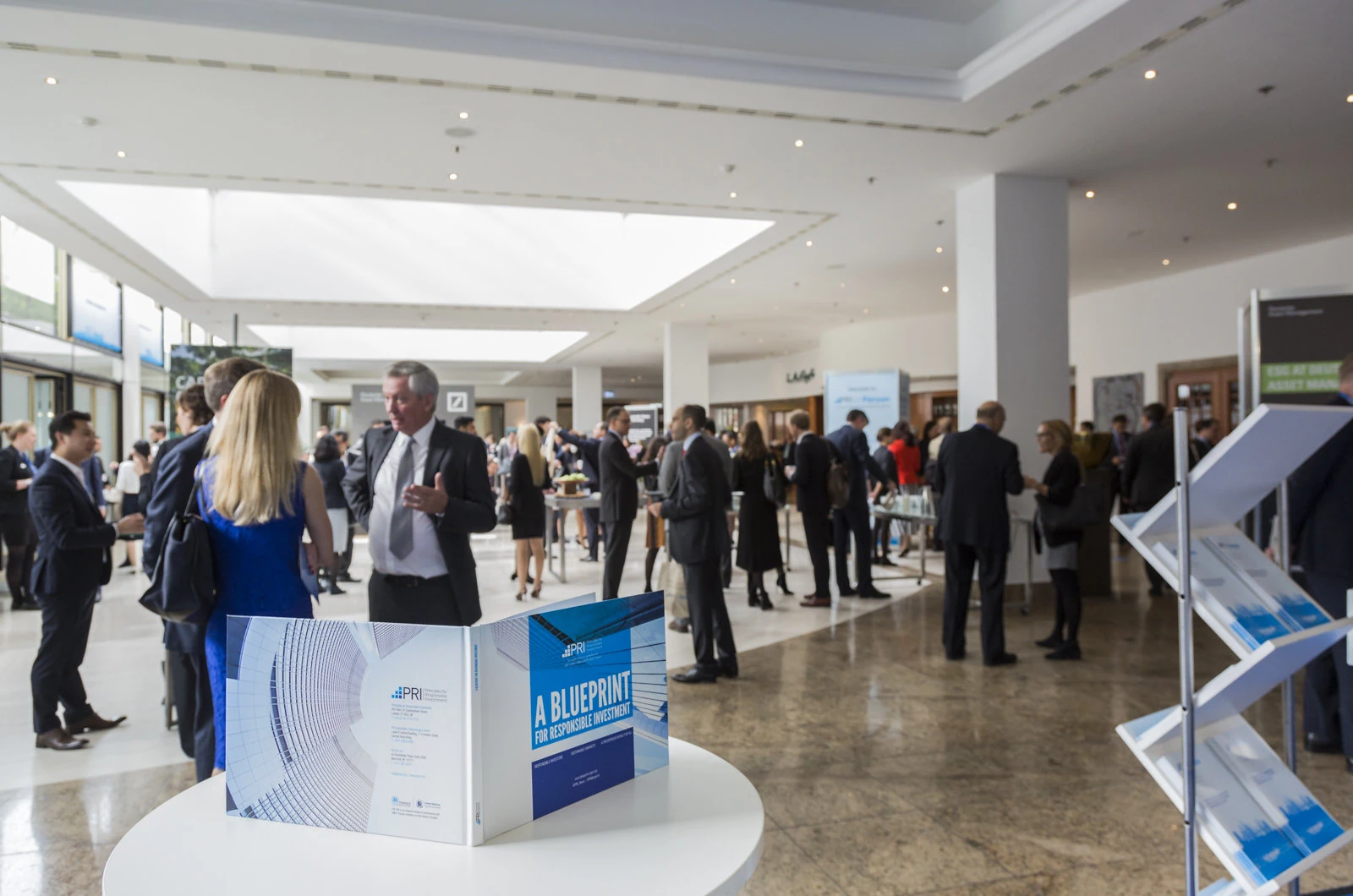
Campaign concept ESG Ride
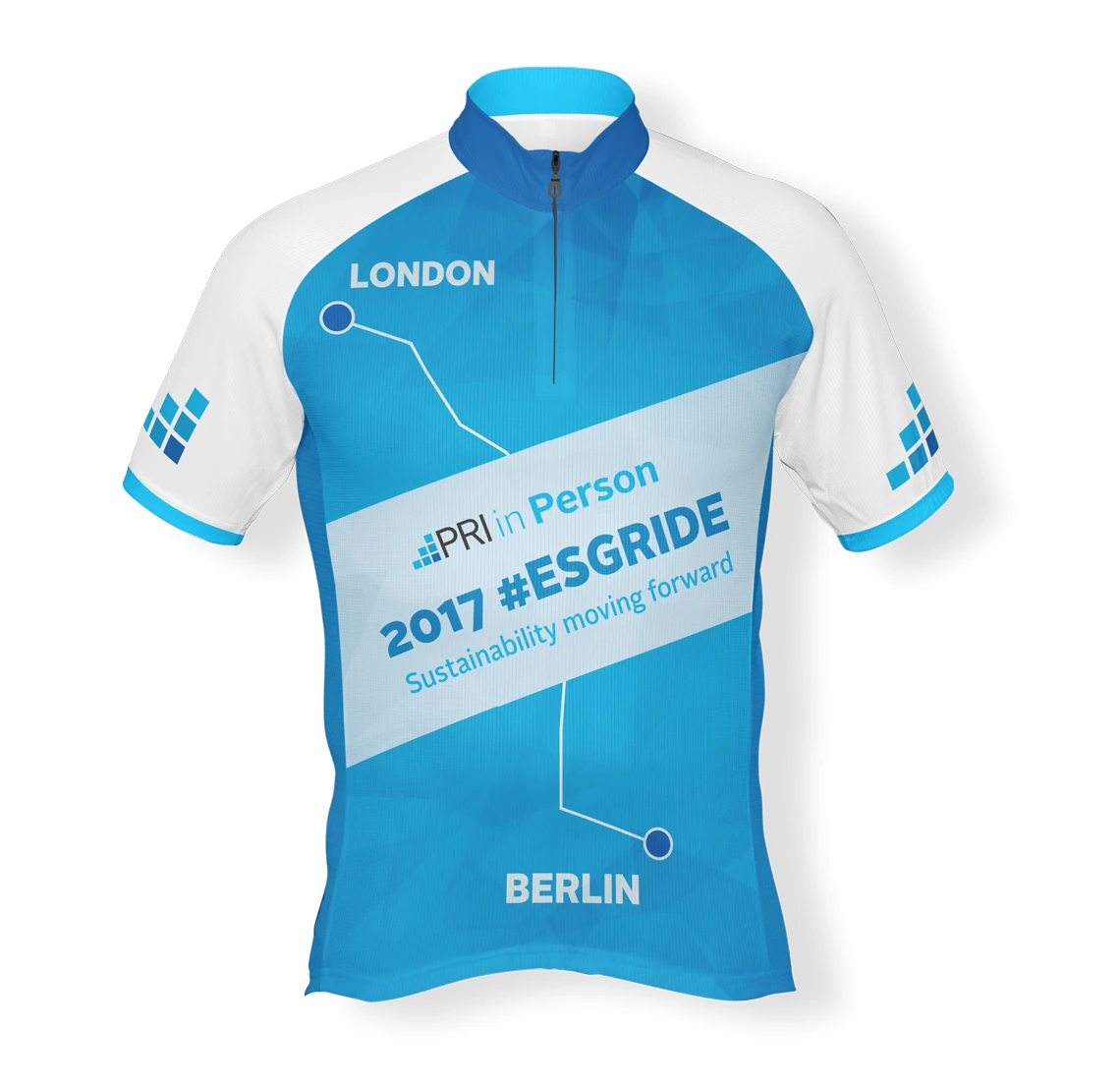
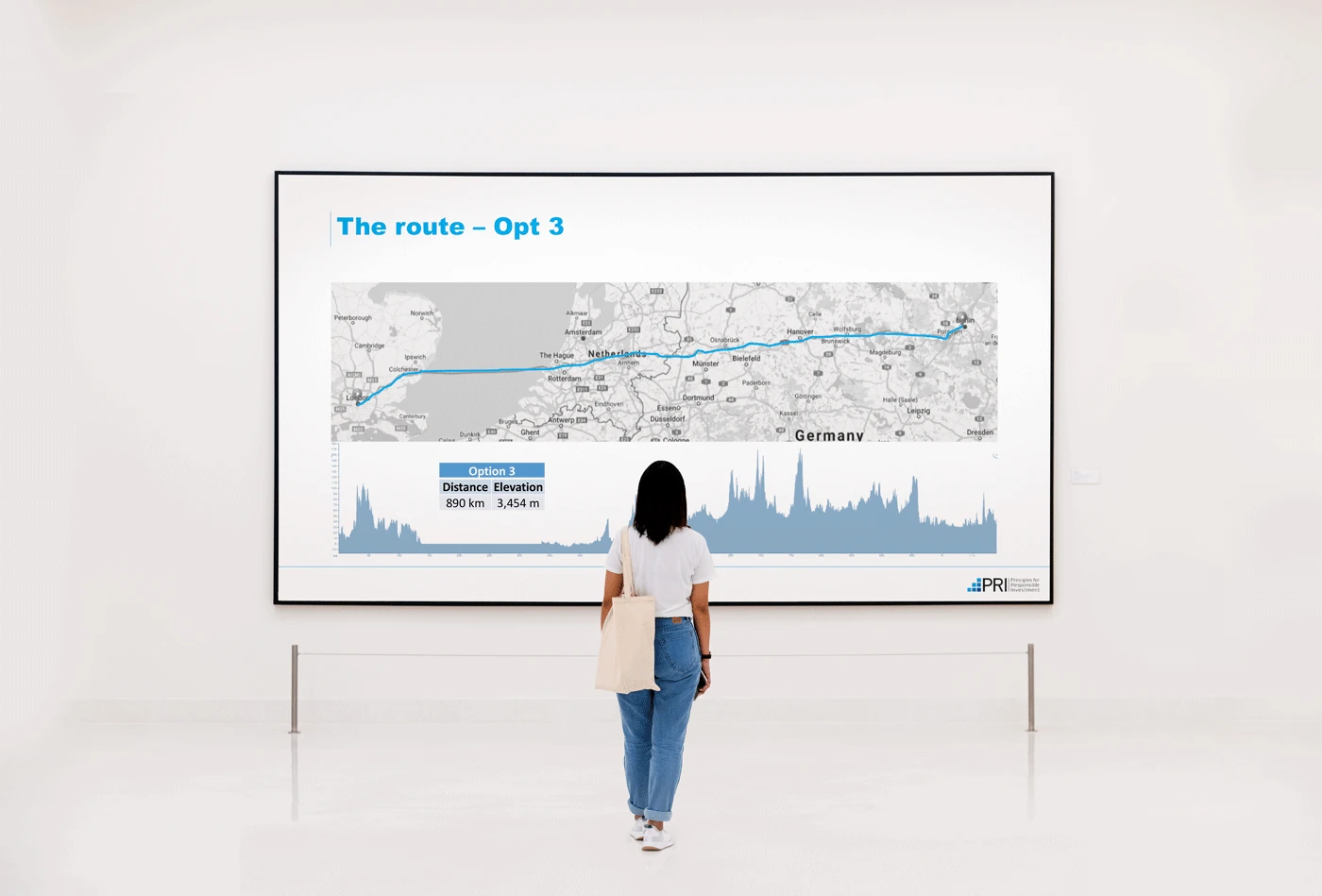
Alessandro also proposed a London-to-Berlin cycling event for PRI employees and signatories. It was a way to connect sustainable travel with the conference and involve people beyond the investment community.
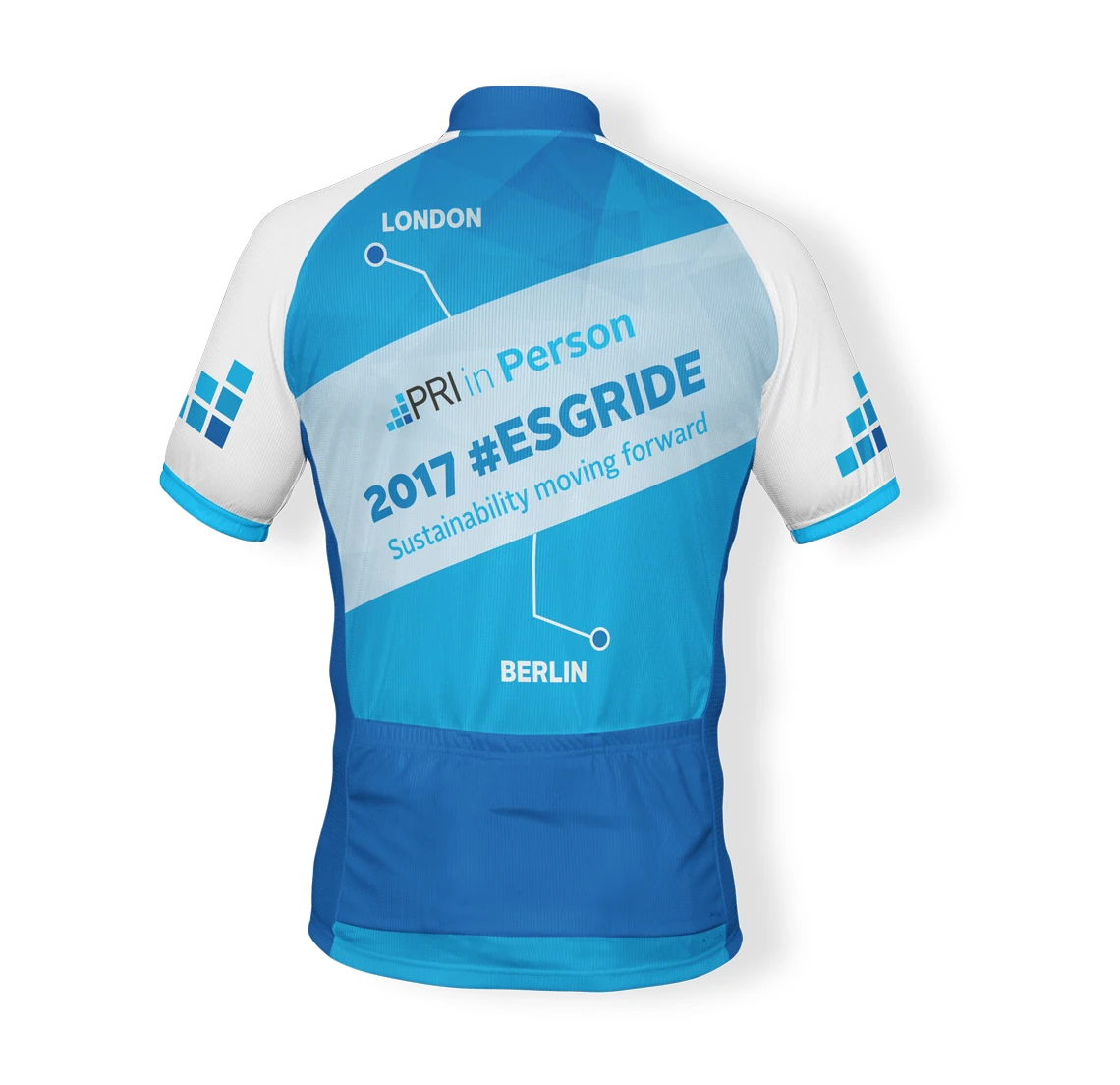
He researched routes and safety with an event specialist, prepared a proposal and designed jerseys under #ESGRIDE. A video diary would have let a wider audience follow the journey. The public campaign did not go ahead: the original group preferred a private ride among colleagues. The proposal underlined the need to agree who wanted to take part before developing a larger campaign.